
Click to download now, finish the installation quickly, and directly unlock the all-round experience
Screenshots



Click to download now, finish the installation quickly, and directly unlock the all-round experience
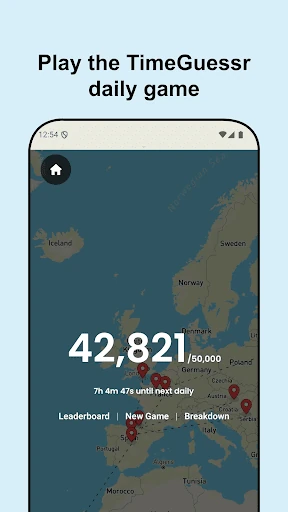
TimeGuessr represents a sophisticated evolution in the trivia category, successfully merging spatial awareness with chronological reasoning. By blending the mechanics of popular geography-based discovery games with historical deduction, it offers a dual-layered challenge that is rare in the mobile market. As a Senior Analyst, I find TimeGuessr to be a standout title that moves beyond simple rote memorization, instead rewarding players for their ability to interpret visual cues, fashion styles, and architectural shifts across centuries. It fits into the trivia landscape not just as a game, but as a digital archive of human history that prioritizes "detective work" over simple multiple-choice questions.
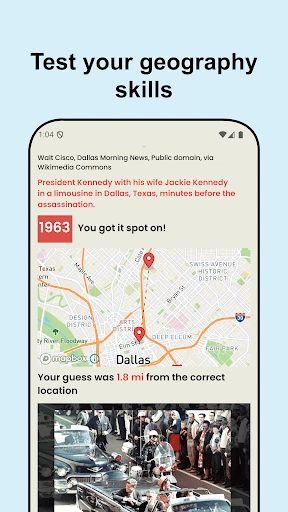
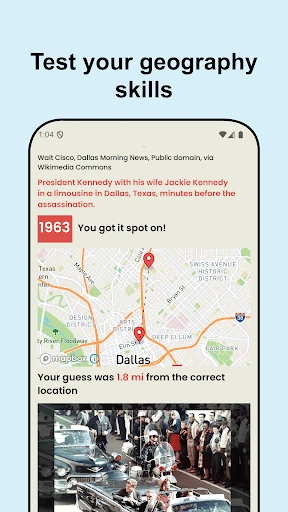
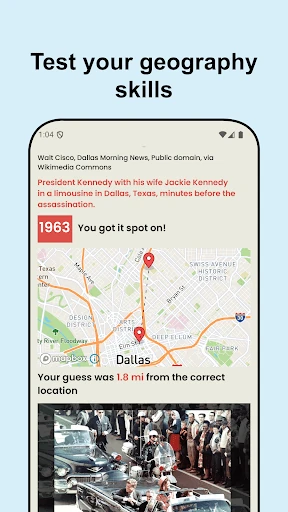
The user experience of TimeGuessr is built on a "minimalist-first" philosophy, ensuring that the historical photography remains the focal point of the interaction. The interface adheres to modern UI standards for the trivia category, utilizing an intuitive "pin-and-scroll" mechanic that feels natural on touchscreens. Transitions between the image viewing and the map-pinning stage are fluid, reducing cognitive load and keeping the focus on the deduction process. However, the design must carefully balance the graininess of historical photos with high-resolution UI elements to ensure accessibility across various device types.
To further elevate the experience, the developers should consider implementing a "Deep Dive" post-game feature that provides a brief historical context or a Wikipedia link for each photo once the round is over. Additionally, adding accessibility features such as a magnifying glass tool for the images and a more granular map zoom would improve the experience for users on smaller screens. Introducing "Thematic Seasons" (e.g., Industrial Revolution or 1920s Jazz Age) could also provide a more structured progression path for specialized history buffs.
TimeGuessr is an essential download for history enthusiasts, geography nerds, and anyone who enjoys the thrill of visual deduction. It successfully bridges the gap between educational software and high-stakes trivia. While it may be challenging for those with little historical knowledge, its "one-more-try" nature makes it an excellent tool for learning through play. We highly recommend this app for players who want a more cerebral alternative to standard trivia apps.