Click to download now, finish the installation quickly, and directly unlock the all-round experience
Screenshots
Click to download now, finish the installation quickly, and directly unlock the all-round experience
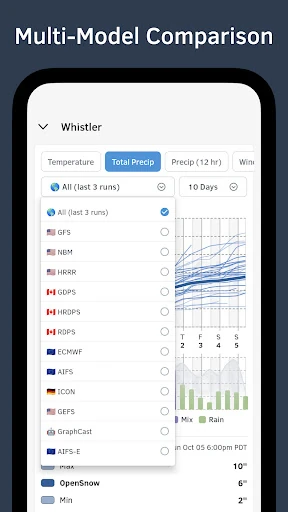
OpenSnow stands as a pinnacle of specialized meteorological technology, distinguishing itself from generic weather apps by focusing exclusively on the complexities of mountain terrain. While mainstream services often struggle with the "mountain effect" and topographic variables, OpenSnow has carved a niche as an authoritative source for high-altitude forecasting. It effectively integrates proprietary AI-driven modeling with human-curated analysis, making it an indispensable tool in the weather landscape for anyone whose safety or recreation depends on alpine conditions.
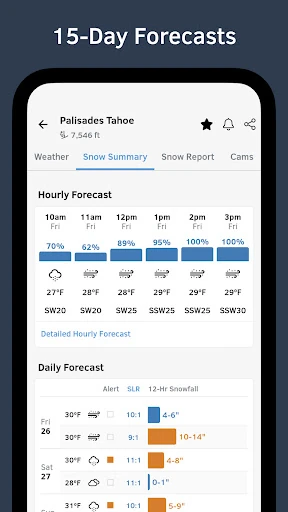
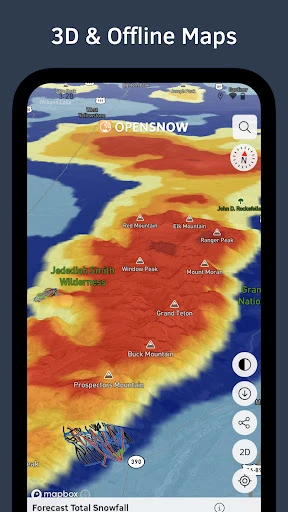
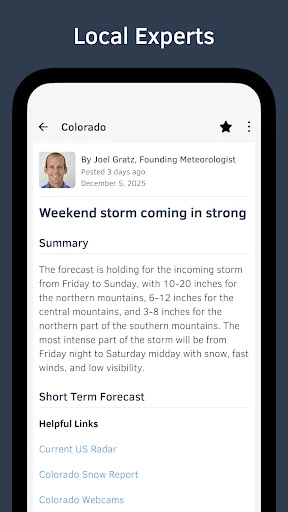
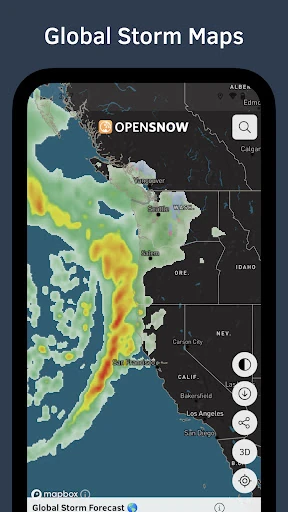
The user interface of OpenSnow is built for efficiency and high-density information retrieval. Adhering to the best practices of the Weather category, it utilizes a map-centric design that allows for quick toggling between layers such as snow depth, radar, and air quality. The inclusion of 3D terrain visualization is a major UX win, as it helps users visualize how weather systems interact with specific ridges and valleys. While the sheer amount of data could be daunting for a novice, the layout remains logical, with favorited locations and expert reports accessible in just a few taps.
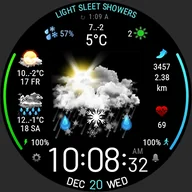
To enhance its global standing, OpenSnow should prioritize expanding its severe weather alerts (lightning, hail, and tornado risks) to international territories like the Alps and the Andes. Additionally, the app could benefit from a "Summer Mode" that refocuses the UI on hiking and mountain biking metrics when snow is not the primary concern. Introducing more robust integration with wearable technology for real-time, on-wrist avalanche and storm alerts would also be a significant functional upgrade for backcountry users.
OpenSnow is the premier weather application for winter athletes, backcountry explorers, and mountain residents. Its target audience is the "weather nerd" and the high-stakes outdoor enthusiast who requires more than just a surface-level forecast. For these users, the app is a vital safety and planning tool. If you live for the mountains or plan your life around the next big storm, OpenSnow is an essential addition to your digital toolkit.